Ceramic coating and paint protection film are often presented as competing upgrades, but they solve different problems. A ceramic coating is a very thin cured layer that changes the paint surface’s chemical and water behaviour. Paint protection film, or PPF, is a much thicker flexible film designed to absorb physical contact and impacts.
The right choice depends on the damage you want to reduce, the panels most at risk, the desired appearance and the maintenance you are prepared to perform. Some vehicles benefit from one product; others use both.
Ceramic Coating vs PPF at a Glance
| Comparison | Ceramic coating | Paint protection film |
|---|---|---|
| Basic form | Thin liquid-applied coating that cures on the surface | Flexible urethane film bonded to the panel |
| Main strength | Gloss, chemical resistance and easier cleaning | Protection from stone chips, scuffs and light physical impacts |
| Rock-chip protection | Very limited | Designed for this purpose |
| Water behaviour | Usually strongly hydrophobic | Depends on the film’s topcoat; many modern films are hydrophobic |
| Thickness | Extremely thin | Much thicker physical barrier |
| Typical coverage | Often applied to most painted surfaces | Partial-front, full-front or full-vehicle coverage |
| Finish options | Usually maintains or enhances the existing gloss | Available in clear gloss, matte and coloured options |
| Removal | Normally removed through abrasion or polishing | Professionally peeled from suitable paint |
These are general differences. Exact performance depends on the named product, installation and warranty terms.
What Ceramic Coating Is Designed to Do
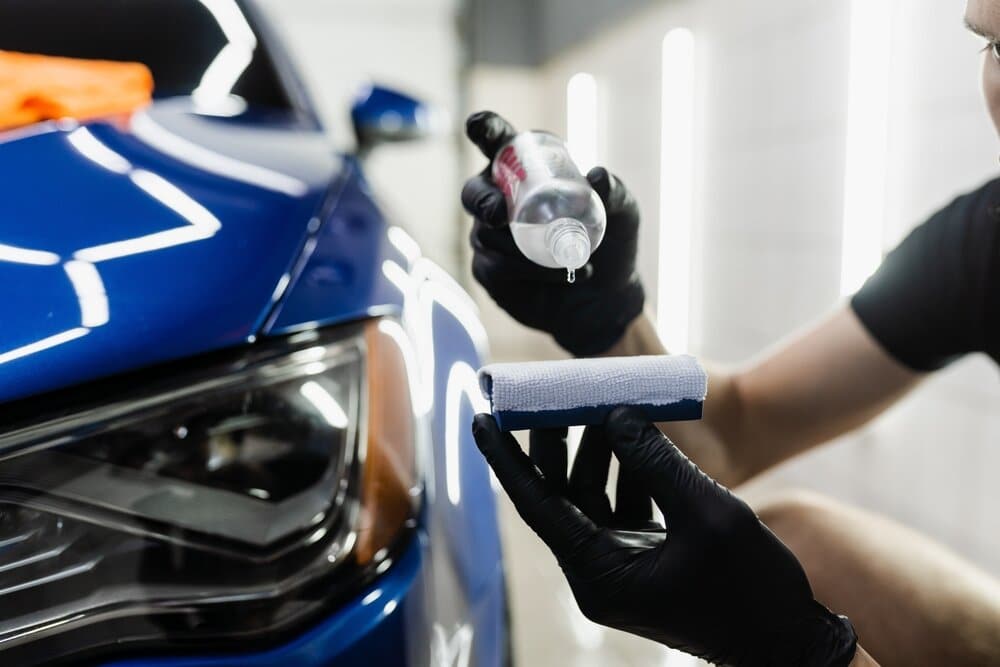
An automotive ceramic coating is applied as a liquid over clean, prepared paint. After flashing and curing, it forms a transparent film that can increase gloss, reduce surface energy and add resistance to some detergents and environmental contamination.
Its slick, hydrophobic surface can make routine washing easier because dirt has less opportunity to bond strongly. Bird residue, insects, road film and hard water still need prompt removal. A coating is resistant to contamination; it is not stain-proof or maintenance-free.
The coating is too thin to absorb the energy of a stone impact. It may reduce light wash marring under suitable conditions, but it cannot reliably prevent chips, deep scratches, dents or parking damage.
What Paint Protection Film Is Designed to Do
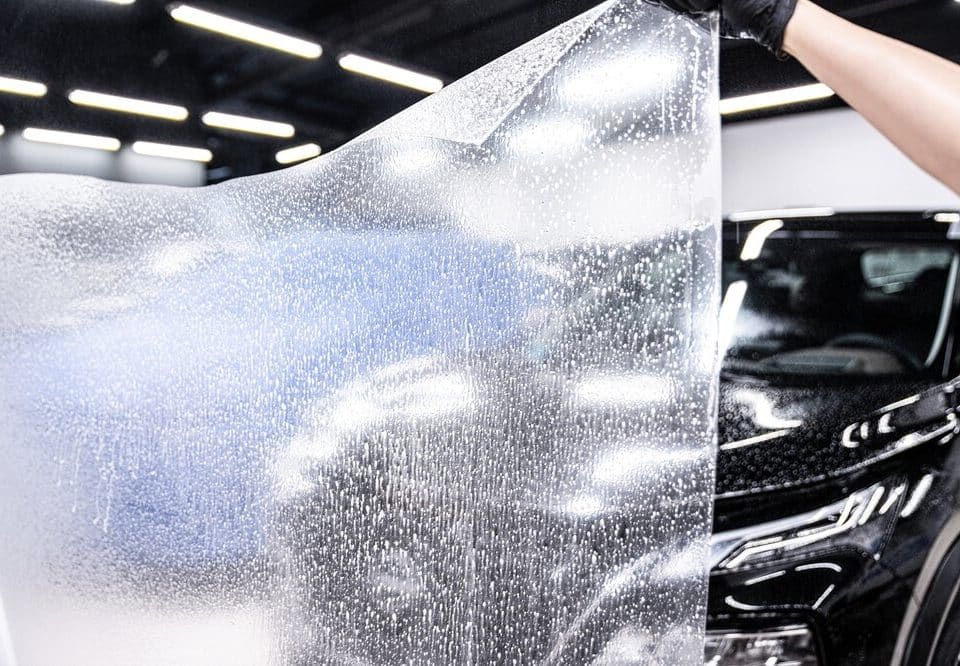
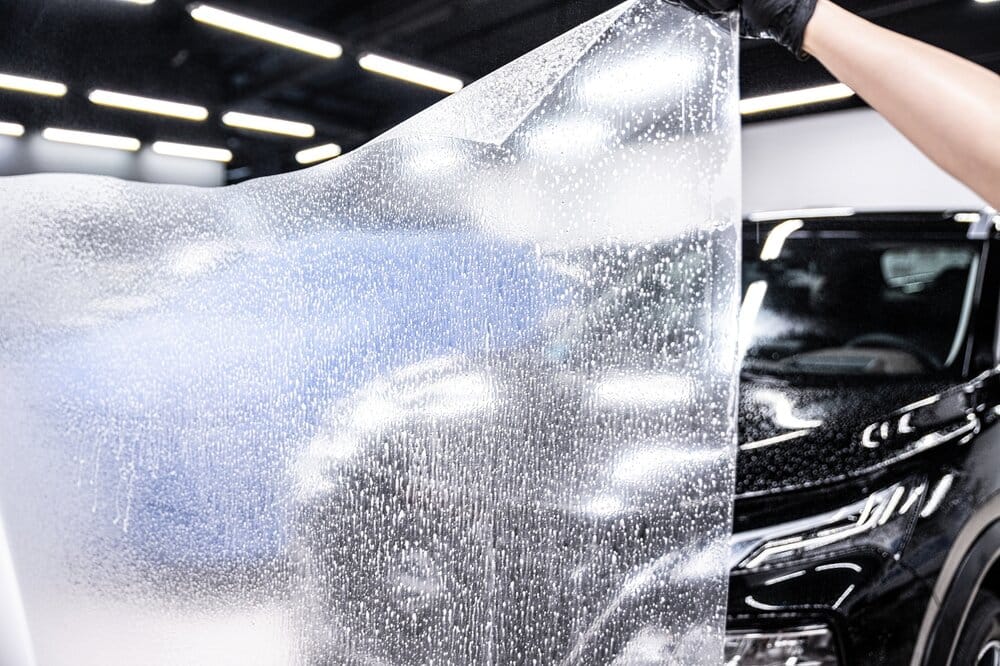
PPF is a transparent or coloured polyurethane film installed over painted panels. Its thickness and elasticity allow it to take some of the physical damage that would otherwise reach the paint.
For example, 3M describes its Paint Protection Film Series 100 as protection against stone chips, scratches, bug damage and stains. Product capabilities vary, so the film’s technical sheet and warranty should be reviewed.
Many modern films have a self-healing topcoat. This term generally refers to light surface marks in the film becoming less visible with heat. It does not mean a torn or deeply cut film repairs itself, and it does not reverse damage that has already reached the paint.
Impact Protection: The Largest Difference
When the primary concern is gravel, road debris or repeated contact on high-risk panels, PPF is the more relevant product. The film acts as a sacrificial physical layer between the hazard and the paint.
Ceramic coating can add chemical resistance and make contamination easier to remove, but it does not provide comparable impact absorption. Hardness claims for coatings should not be confused with stone-chip protection.
Common high-impact PPF areas include:
- front bumper;
- hood and front fenders;
- mirror caps;
- rocker panels;
- lower doors;
- rear wheel arches; and
- loading edges or door cups.
The best coverage pattern depends on vehicle shape and use. A low sports car, highway commuter and occasional-use vehicle may have very different impact zones.
Chemical Resistance and Ease of Cleaning
Ceramic coating’s main advantage is surface behaviour. Water, dirt and some contamination may release more easily during a correct wash. This can reduce the effort required to maintain gloss, although safe washing is still necessary.
PPF protects the paint beneath it, and many current films include a stain-resistant or hydrophobic topcoat. However, insects, bird droppings, tar and minerals should still be removed. If contamination damages the film, the affected section may need cleaning, correction or replacement.
A ceramic coating formulated for use on PPF can be applied over compatible film to increase slickness or water repellency. The film manufacturer’s instructions should be checked first because not every coating or solvent system is approved for every film.
Appearance and Finish
A ceramic coating is transparent and generally follows the existing finish. It can improve reflectivity and perceived depth on well-prepared gloss paint, but it does not hide scratches, oxidation or poor bodywork.
Clear gloss PPF is intended to preserve the painted appearance. Matte or satin film can change the finish, while coloured PPF can alter both appearance and protection. Seams and edges may be visible on close inspection, depending on the coverage pattern, panel design and installation method.
Texture, clarity and adhesive behaviour differ by film. Examine a completed vehicle or sample panel rather than evaluating a brand only from online photographs.
Surface Preparation Before Installation
Both products require clean paint. Washing and decontamination remove material that could interfere with adhesion or remain visible under the protection.
Paint correction is optional and should be based on the vehicle’s condition and the owner’s expectations. A coating or transparent film will not erase existing swirl marks or scratches. If defects are corrected, the paint should retain enough clear coat for safe polishing.
PPF installation also requires careful alignment, stretching and edge management. Complex panels, repainted areas, sensors, badges and trim can affect the plan. The installer should identify any paint defects or body repairs before work begins.
Coverage and Budget
Ceramic coating is commonly applied to most exterior painted surfaces because the liquid can cover large areas efficiently after preparation. PPF is often priced by coverage area and installation complexity.
A partial-front package may cover the most impact-prone sections of the bumper, hood and fenders. A full-front package normally extends coverage across complete front panels, reducing visible transition lines. Full-vehicle PPF provides the broadest physical barrier but requires more material and labour.
Comparing only the total price can be misleading. Ask which panels, edges, trim pieces and preparation steps are included. A lower quote may cover less area or use a different film and warranty.
Durability and Warranty
Neither product has one universal lifespan. Durability depends on the named coating or film, exposure, maintenance, installation quality and warranty conditions.
Coatings gradually lose surface properties through washing, contamination and chemical exposure. PPF can accumulate impacts, edge wear, stains or topcoat damage. Outdoor exposure and high mileage can shorten the service life of both.
Read the written warranty rather than relying on a verbal number. Check coverage for yellowing, bubbling, cracking, adhesive failure, staining, loss of gloss or coating performance. Confirm whether registration, inspections or approved maintenance are required.
Maintenance Differences
Both surfaces should be washed with clean tools and compatible products. Avoid dirty automatic brushes, dry wiping and aggressive chemicals.
For ceramic coating:
- follow the initial cure instructions;
- decontaminate when road film masks water behaviour;
- use compatible maintenance products; and
- complete required warranty inspections.
For PPF:
- clean insects, bird residue and tar promptly;
- avoid picking at edges or using a pressure washer too close to seams;
- do not place abrasive tools against the film;
- use products approved for the film’s topcoat; and
- have lifting edges or damage inspected before dirt spreads underneath.
Repair, Removal and Bodywork
A damaged PPF section can often be removed and replaced without redoing the entire vehicle. Removal should be performed with appropriate heat and technique, particularly on repainted panels. Paint condition and repair quality affect removal risk.
A cured ceramic coating normally must be abraded or polished before repainting or applying another coating. If a body panel is repaired, both the paint-protection product and any warranty documentation may need to be updated.
Tell a collision centre or body shop which surfaces are coated or filmed before work begins. Replacement film should not be installed until fresh paint has cured for the period specified by the paint and film manufacturers.
Can Ceramic Coating and PPF Be Used Together?
Yes, when the products are compatible. PPF is normally installed first because it must bond directly to properly prepared paint. A suitable coating can then be applied over the film and exposed painted panels.
This combination uses PPF where physical impact protection matters and coating where easier cleaning and surface behaviour are priorities. It does not make the vehicle damage-proof: film can still tear, coating can still stain and uncovered areas remain exposed to impacts.
Gtechniq’s comparison similarly distinguishes PPF as a physical barrier from ceramic coating as a surface treatment. Ceramic Pro also treats the products as complementary options rather than interchangeable protection.
Which Option Fits Different Priorities?
Choose ceramic coating when:
- easier routine cleaning and hydrophobic behaviour are primary goals;
- you want to maintain or enhance gloss across most painted surfaces;
- stone-chip protection is not the main concern; and
- you understand that safe washing and maintenance remain necessary.
Choose PPF when:
- stone chips, road debris or scuffs are the main concern;
- specific high-impact panels need a sacrificial physical barrier;
- you want clear, matte or coloured film options; and
- you accept that edges, seams and eventual film replacement are part of ownership.
Consider both when:
- front panels face frequent impact exposure;
- you also want hydrophobic behaviour and easier cleaning;
- the coating is approved for the selected film; and
- the installation order and warranty requirements are documented.
Questions to Ask Before Deciding
- What exact coating or film is being quoted?
- Which panels and edges are included?
- What damage is the product designed to reduce?
- What does the written warranty cover and exclude?
- Is the vehicle’s paint original or repaired?
- What preparation and paint correction are included?
- How should the surface be washed and decontaminated?
- If both products are used, are they approved for one another?
- How are damaged sections repaired or replaced?
Final Takeaway
Ceramic coating and PPF are not equivalent. Coating improves chemical resistance, gloss and ease of cleaning; PPF provides the physical thickness needed to reduce chips and scuffs. The strongest choice begins with the type of damage you want to manage.
For more detail, read how ceramic coatings work and the guide to paint protection film. You can then compare available ceramic coating options with the PPF coverage appropriate for your vehicle.