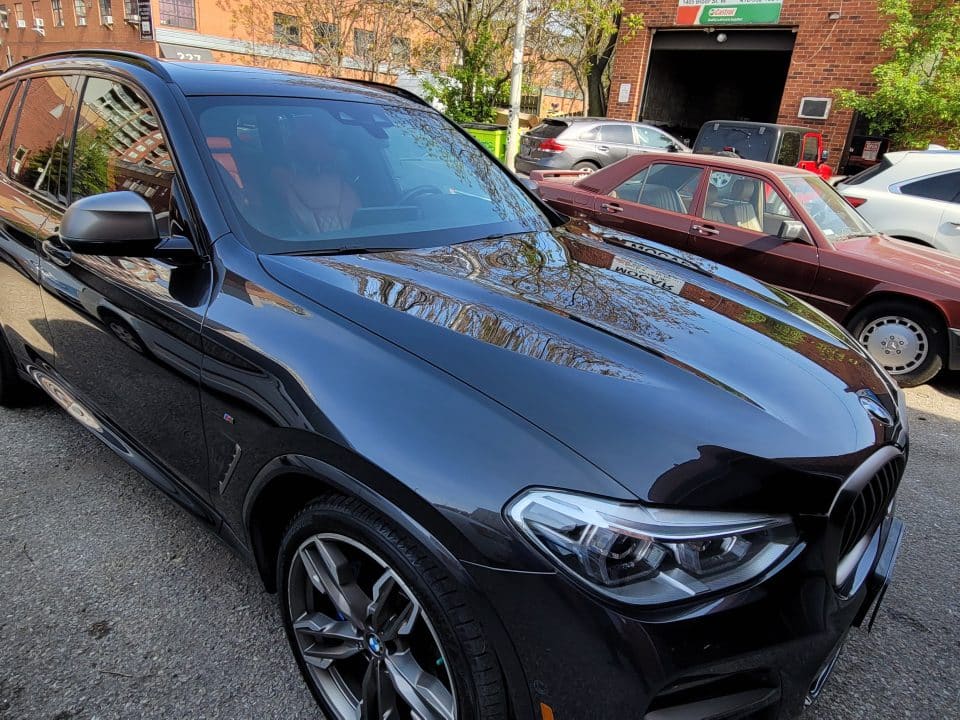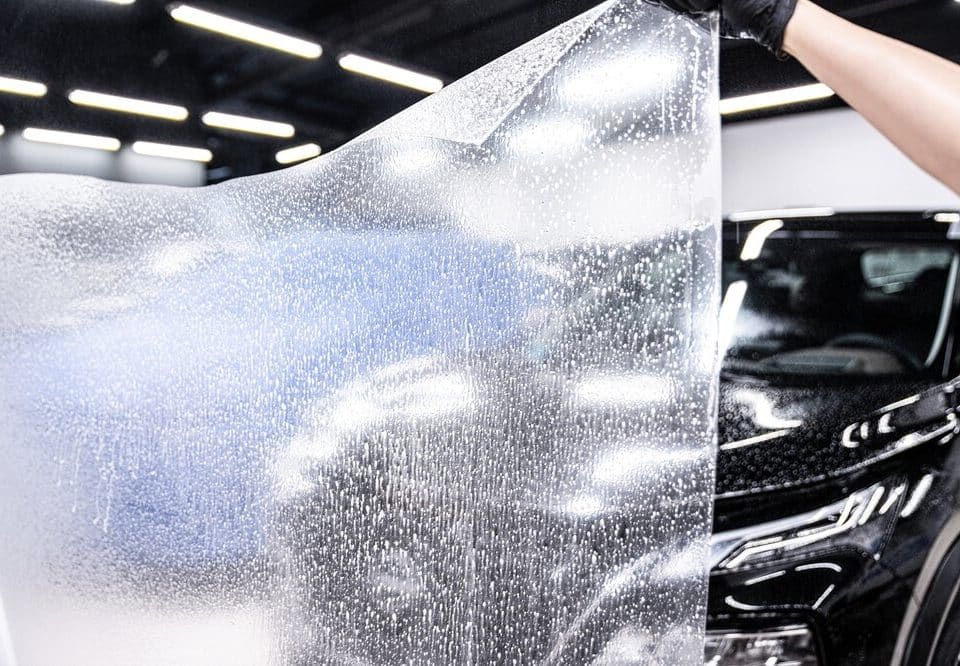
Understanding how ceramic coatings work makes it easier to separate useful protection from exaggerated claims. An automotive ceramic coating is a liquid product applied over cured paint or clear coat. As it dries and cures, it forms a thin, transparent film that changes the surface's behaviour.
The formula, thickness, cure method and performance vary by product. “Ceramic” is a broad market category, not a guarantee that every coating has the same chemistry or durability. Manufacturer instructions and test data are therefore more useful than a generic label.
What an Automotive Ceramic Coating Actually Is
Many automotive coatings use silicon-containing compounds, resins and solvents. Some manufacturers describe their products as silica- or quartz-based, while others use hybrid polymer systems. The liquid carries reactive ingredients across the paint; after application, the carrier evaporates and the remaining material forms a clear protective layer.
This film is extremely thin compared with paint protection film. It does not create a thick shell over the vehicle, and it is not the same material as the high-temperature ceramic used in tiles or engine components.
Manufacturers describe bonding in slightly different ways. For example, Ceramic Pro explains that its coatings chemically bond with the treated surface, while Gtechniq describes chemical bonding for several quartz-based coatings. Those statements apply to their specific systems and should not automatically be extended to every product sold as a ceramic coating.
How a Ceramic Coating Bonds to Paint
Automotive paint normally has a pigmented base coat covered by a transparent clear coat. The ceramic coating is applied to that clear coat, not directly to bare colour pigment. Adhesion depends on the coating formula and on having a clean, compatible surface.
Road film, wax, polishing oils, silicone residue and other contamination can interfere with uniform contact. That is why preparation usually includes washing, chemical and mechanical decontamination, inspection and a final panel wipe recommended by the coating manufacturer.
A coating should not be described as simply “filling the pores” of paint. Modern clear coat is a cured polymer surface, and coating behaviour is more complex than filling visible holes. The important practical point is that residue between the paint and coating can weaken adhesion or create an uneven finish.
Flashing, Levelling and Curing
Three stages are commonly discussed during application:
- Flashing: some of the carrier solvents evaporate after the liquid is spread. The product may begin to look oily, rainbow-like or slightly tacky.
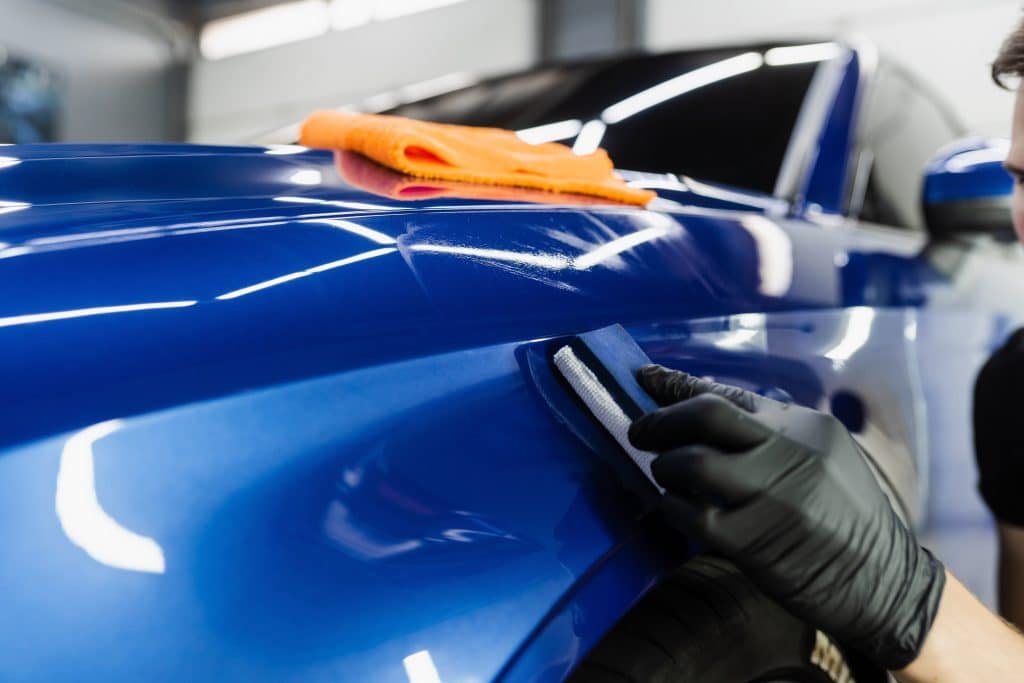
- Levelling: the installer removes excess product before it hardens unevenly. Missed residue can cure as dark patches or streaks often called high spots.
- Curing: the remaining coating continues forming and cross-linking into a more stable film. A surface that feels dry may not yet be fully cured.
Temperature, humidity, ventilation, product chemistry and layer thickness can change the working and curing time. Instructions for one coating should not be assumed to apply to another. During the initial cure, the surface may need to stay dry and protected from cleaners, dew, rain or bird droppings for a manufacturer-specified period.
Why Coated Paint Beads Water
A cured coating can lower the surface energy of the paint. Water then has less tendency to spread into a flat sheet, so droplets form a higher contact angle and appear as beads. Droplets that release easily can carry some loose dirt away from the surface.
Water behaviour is useful, but it is not a complete durability test. Strong beading does not prove that a coating is scratch-proof, and reduced beading does not always mean the entire coating has disappeared. Mineral deposits, traffic film or incompatible products can temporarily mask hydrophobic behaviour.
Hydrophobic also does not mean water-spot-proof. If droplets remain and evaporate, minerals can be left behind. Washing and drying the vehicle remains necessary.
What Ceramic Coatings Can Protect Against
A suitable cured coating can act as a sacrificial surface over the clear coat. Depending on the tested product, it may provide:
- greater resistance to some detergents and environmental contamination;
- easier release of dirt during routine washing;
- less direct contact between the clear coat and bird residue, tree sap or road film;
- a smoother-looking, glossier surface; and
- better durability than a short-term wax or spray sealant.
“Resistance” is not the same as immunity. Bird droppings, insects, tree sap, hard water and chemicals should still be removed promptly. If contamination remains long enough, it can stain the coating or reach the paint underneath.
What Ceramic Coatings Cannot Do
A ceramic coating is not a replacement for impact-resistant film. It cannot reliably prevent stone chips, parking damage, deep scratches or dents. It also cannot correct existing swirl marks, oxidation or etched clear coat. Those defects must be addressed before application if correction is desired.
Coatings may reduce light wash marring under favourable conditions, but poor washing can still scratch the paint. Dirty brushes, automatic washes with aggressive contact media and dry wiping remain common sources of defects.
No coating makes a vehicle maintenance-free. It changes how the surface behaves and can make correct maintenance easier; it does not eliminate washing, drying or periodic inspection.
What “9H Hardness” Means
Hardness claims are often misunderstood. In coating specifications, 9H commonly refers to a pencil-hardness test, not the Mohs mineral-hardness scale. ASTM D3363 describes a method that uses drawing leads of known hardness to evaluate a coating film.
A pencil-hardness result can help compare coatings tested under the same method, but it does not mean the vehicle is scratch-proof. Film thickness, cure conditions, substrate, test load and abrasion type all affect real-world behaviour. Hardness is only one property; flexibility, adhesion and chemical resistance also matter.
Why Surface Preparation Controls the Final Appearance
Ceramic coating is transparent, so the condition below it remains visible. It can increase gloss and change how light reflects, but it will not hide deep scratches or restore missing clear coat.
A typical preparation sequence includes:
- Thorough washing to remove loose soil and road film.
- Chemical decontamination for bonded iron particles, mineral residue or organic contamination.
- Mechanical decontamination when necessary.
- Paint inspection under suitable lighting.
- Machine polishing if defects are being corrected.
- Removal of polishing oils and residue with a compatible panel preparation product.
- Application in a clean environment within the required temperature and humidity range.
Paint correction is not always mandatory, especially on sound new paint, but the surface must be clean and compatible. The desired appearance and paint thickness should determine how much polishing is appropriate.
Do More Layers Always Provide Better Protection?
Not necessarily. Some coating systems are designed for a base layer and a compatible top layer. Others specify one or two coats of the same product. Applying extra layers outside the instructions can waste material or create bonding and levelling problems.
Evaluate a system by its written application method, maintenance requirements and warranty conditions. A quoted number of layers is not meaningful without the product names and the role of each layer.
How Ceramic Coating Performance Declines
Coatings face abrasion from washing, road grit and wiping, as well as detergents, salts, environmental fallout and temperature cycling. Over time, the surface may become less slick or hydrophobic. Contamination can also sit on top of an intact coating and make it appear weak.
Before assuming the coating has failed, clean and decontaminate it using products approved for that system. If performance does not return, the installer can inspect the surface and determine whether maintenance, correction or reapplication is appropriate.
Final Takeaway
Ceramic coatings work by forming a thin, cured film over automotive clear coat. Their useful characteristics come from adhesion, surface chemistry and correct curing—not from an invisible shield that prevents every kind of damage.
Good results depend on honest product specifications, thorough preparation, careful levelling, suitable curing conditions and safe washing afterward. For a step-by-step view of the work involved, read the ceramic coating application process. You can also review available automotive ceramic coating options and ask for the product instructions and warranty before deciding.