

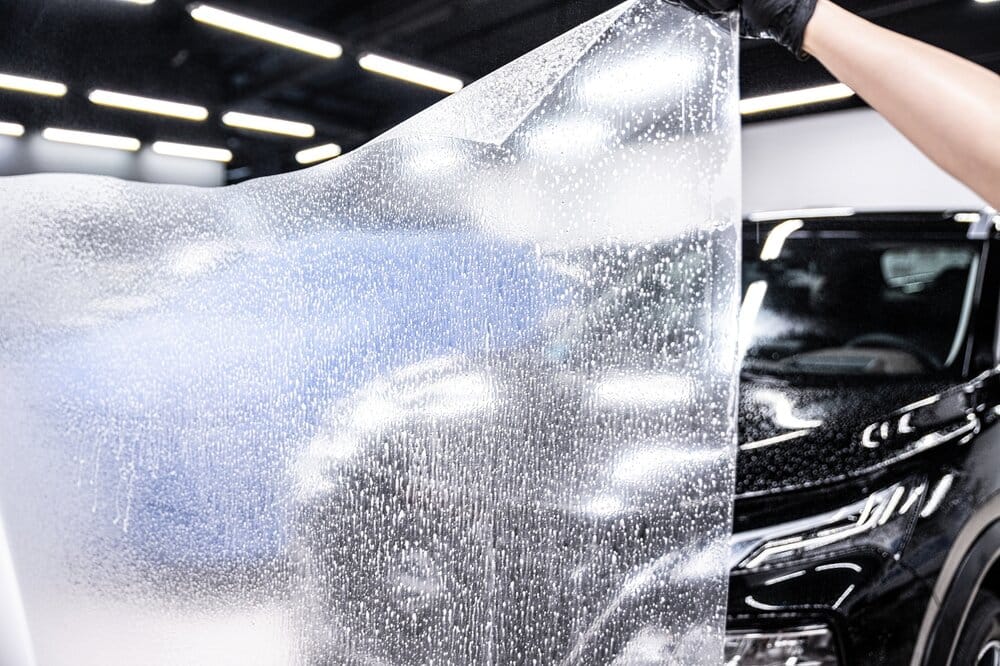
Paint protection film maintenance helps the film remain clear, secure and easy to clean. PPF is designed to absorb road wear, but it still collects insects, tar, minerals, brake dust and traffic film. Incorrect washing or chemical use can stain the topcoat, mark matte film or lift exposed edges.
The exact care instructions depend on the film manufacturer and product series. Keep the installer’s written aftercare and warranty documents, and follow those product-specific directions when they differ from general advice.
Allow Fresh PPF to Set Before Washing
PPF uses a pressure-sensitive adhesive, but installation moisture needs time to escape and the edges need time to settle. The film may show temporary haze or small moisture pockets immediately after installation.
Ask the installer when the vehicle can be washed, pressure-rinsed or treated with another product. Published schedules vary. For example, 3M’s PPF FAQ specifies a waiting period before washing and a longer period before waxing for the products covered by that document.
Do not press bubbles, pick at edges or puncture moisture pockets. If an area looks unusual after the expected drying period, let the installer inspect it.
Routine Washing Tools
Use tools that remove contamination without unnecessary friction:
- a film-compatible automotive shampoo;
- a clean microfiber wash mitt or multiple soft wash towels;
- separate brushes and buckets for wheels;
- soft microfiber drying towels or filtered air; and
- a compatible drying aid when permitted by the film manufacturer.
Avoid household detergents, rough sponges, abrasive pads and dirty automatic-wash brushes. “Heavy-duty” cleaners are not automatically more effective; the wrong concentration or dwell time can damage the topcoat.
A Safe PPF Washing Sequence
- Work on a cool surface: strong sunlight and hot film can dry soap or mineral-rich water too quickly.
- Rinse loose grit: remove sand and soil before touching the film.
- Use a compatible pre-wash if needed: allow the product to loosen road film without drying on the surface.
- Wash from cleaner to dirtier areas: leave rocker panels, rear panels and impact zones until later.
- Use light, straight passes: do not grind contamination into the film.
- Rinse seams and trim carefully: remove soap without directing damaging pressure under an edge.
- Dry the film: prevent hard-water residue from drying on the surface.
PPF can be washed with the rest of the vehicle, but visible film edges deserve extra attention. Clean along an edge rather than pushing a towel or mitt forcefully into it.
Using a Pressure Washer Near PPF
A pressure washer can rinse loose debris effectively, but concentrated pressure placed too close to an edge can lift or damage the film. Keep a safe distance, use a suitable fan pattern and aim the spray across the edge rather than underneath it.
XPEL’s published product-care guidance, for example, warns against high-pressure water near film edges. The correct distance and pressure depend on the equipment and film, so follow the applicable instructions instead of relying on one universal number.
If an edge is already raised, do not pressure-wash it. Dirt and water can move beneath the adhesive and enlarge the affected area.
Removing Insects and Bird Droppings
Insects and bird residue should be removed promptly. Heat can dry them onto the topcoat, and repeated aggressive scrubbing may leave marks.
Use the least aggressive process that works:
- Rinse loose residue.
- Apply a PPF-compatible insect or contamination cleaner.
- Allow the product to dwell for the stated time without drying.
- Gently wipe with clean microfiber.
- Rinse and dry the area.
Never scrape the film with a razor blade or hard plastic tool. If residue remains, repeat a gentle treatment or ask the installer to assess it.
Tree Sap, Tar and Fuel Spills
Tree sap and tar may require a dedicated film-safe solvent. Test the product in an inconspicuous area and keep it off unprotected trim or paint if the label requires.
Fuel and other petroleum spills should be rinsed and cleaned promptly. 3M’s film care guide specifically advises cleaning fuel spills quickly and then washing, rinsing and drying the area.
Do not leave a strong solvent soaking on a seam. Follow the film manufacturer’s chemical restrictions, and contact the installer when the contaminant or product is unknown.
Water Spots on Paint Protection Film
Hydrophobic PPF can still develop mineral spots. As water droplets evaporate, dissolved minerals remain on the surface. Repeated exposure and heat can make deposits harder to remove.
Dry the film after washing and avoid sprinkler overspray where practical. Fresh residue may come off with normal shampoo. More established deposits may require a compatible water-spot remover.
Do not use household acids or abrasive compounds without approval. A chemical or polish strong enough to remove a deposit may alter gloss, stain resistance or the texture of matte film.
What “Self-Healing” PPF Really Means
Self-healing refers to light surface marks in the film’s topcoat becoming less visible when the polymer relaxes with warmth. It does not mean the film can repair a deep cut, puncture or torn edge.
The amount of warmth required and the types of marks that respond depend on the film. Normal ambient warmth or warm water may be sufficient for some products. Do not use a torch or uncontrolled heat gun on the vehicle. Excessive heat can distort film, damage paint or create a safety hazard.
If a mark remains after normal conditions, it may be too deep for self-healing or may have penetrated the film. Let the installer inspect it before attempting aggressive correction.
How to Assess Chips, Cuts and Scratches
After an impact, clean the area gently and inspect it under good lighting:
- Light topcoat mark: may become less visible through the film’s designed self-healing response.
- Visible indentation: may indicate that the film absorbed an impact but was stretched or compressed.
- Cut or puncture: means the physical barrier has been breached.
- Paint visible beneath damage: requires inspection to determine whether the paint was also affected.
- Film lifted around the impact: can allow moisture and dirt beneath the adhesive.
A damaged section does not always require full-vehicle removal. PPF is installed panel by panel, so the affected piece can often be replaced independently.
Lifted Edges and Contamination Under the Film
Do not trim, glue or press a dirty lifted edge at home. The installer may be able to clean and secure a small area, but contaminated adhesive or stretched film can prevent a stable repair.
Schedule an inspection when you notice:
- an edge that continues lifting;
- dirt or a dark line spreading beneath the film;
- a seam moving from its original position;
- bubbling that appears long after installation; or
- film pulling away around a sensor, badge or body crease.
Early assessment may limit the size of the affected area.
Care for Matte or Satin PPF
Matte film requires products that do not add uneven gloss. Traditional waxes, polishing compounds and oily dressings can create shiny patches or inconsistent texture.
Use cleaners and protectants specifically approved for the matte film. Remove fingerprints and oily residue promptly with the manufacturer-recommended method. Never machine-polish matte PPF unless the film maker provides a procedure, because polishing can permanently alter the finish.
Wax, Sealant and Ceramic Coating Over PPF
Some PPF products accept compatible waxes, sealants or ceramic coatings; others have restrictions. Avoid products containing abrasive cleaners, strong dyes or solvents unless approved.
A compatible coating can improve slickness and water repellency, but it does not increase the film’s thickness enough to prevent major impacts. It may also have separate maintenance and warranty requirements.
Confirm compatibility among the film, topcoat product and installer warranty. Keep records of what was applied and when.
Decontamination and Clay
Normal shampoo may not remove embedded iron particles, tar or rough bonded contamination. Start with a chemical decontaminant approved for the film.
Clay can remove bonded material, but it adds friction and may leave marring on gloss film or alter matte texture. Use it only when the film manufacturer permits it, with suitable lubrication and minimal pressure. Aggressive machine polishing can thin or damage the topcoat.
Automatic Car Washes
Rotating brushes and cloth strips can retain grit from other vehicles and may mark film edges or the surface. Touchless washes avoid direct brush contact but may use strong detergents and high-pressure jets.
Hand washing gives the most control over tools, chemistry and edge treatment. If an automatic wash is necessary, follow the film manufacturer’s guidance and understand the trade-off.
When PPF Should Be Replaced
Film may need replacement when it is torn, deeply punctured, heavily stained, lifting extensively or no longer visually acceptable. A collision repair or panel repaint also requires removal and replacement of film on the affected section.
Removal should be performed with controlled heat and technique. Repainted panels can present greater paint-lift risk than sound factory finishes, so disclose repair history before installation and removal.
Do not wait until film is brittle or severely degraded. Periodic inspection helps identify edge wear, impact damage and topcoat changes while removal is still manageable.
Warranty and Inspection Records
A product warranty may cover specific defects such as yellowing, bubbling, cracking or adhesive failure, but it generally does not cover collision damage, punctures, neglect or improper chemicals. Coverage differs by product.
Keep the invoice, product name, installation date, warranty registration and maintenance records. Photograph damage before cleaning or removal when a claim may be required.
Ceramic Pro’s published PPF aftercare and warranty instructions illustrate how product-specific care and warranty requirements are documented. Always use the instructions for the film actually installed.
Common PPF Maintenance Mistakes
- Washing before the installer’s stated waiting period ends.
- Holding a pressure washer close to film edges.
- Scrubbing dry insects or bird residue.
- Using razor blades or abrasive pads.
- Applying strong solvents without checking compatibility.
- Machine-polishing matte film.
- Using wax or coating products with abrasive cleaners.
- Ignoring lifted edges until contamination spreads.
- Applying uncontrolled heat to force self-healing.
- Discarding warranty and product records.
Final Takeaway
Good paint protection film maintenance combines gentle washing, prompt contamination removal, careful edge treatment and early inspection of damage. PPF can absorb wear that might otherwise reach the paint, but it is still a replaceable material with limits.
Follow the exact manufacturer instructions for washing, chemicals and topcoat products. For help selecting protected panels, read the PPF coverage guide. The ceramic coating versus PPF comparison explains how the two protection types differ.