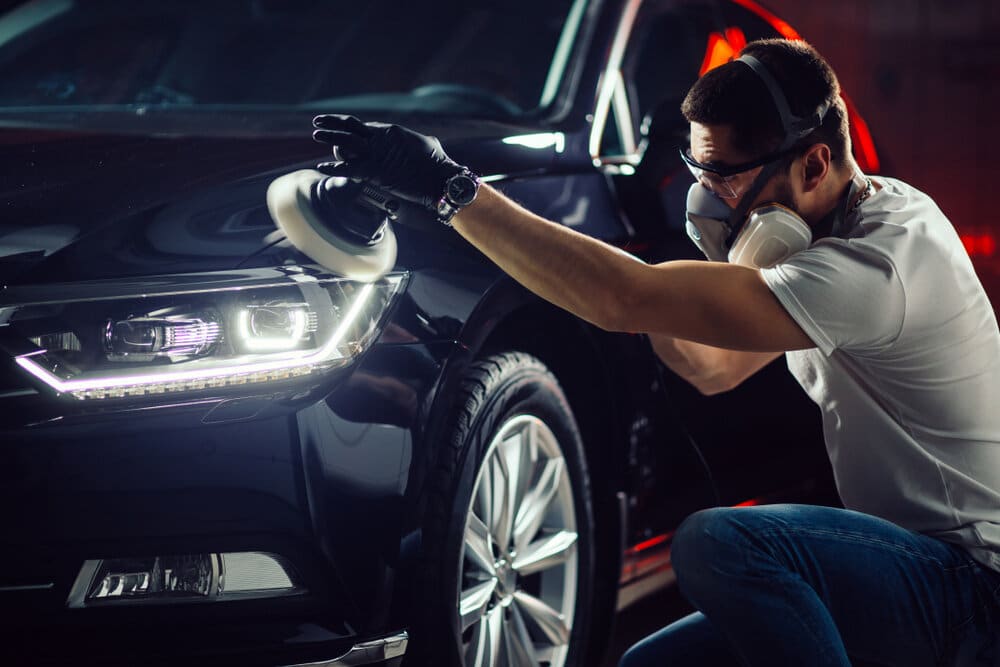
Car wash vs car detailing comparisons often treat the two as competing services, but they solve different problems. Washing is routine contamination removal. Detailing is a broader process that may include deep cleaning, decontamination, paint correction and protection based on the vehicle’s condition.
A car does not need a full detail every time it becomes dirty. Regular, careful washing is the foundation of maintenance, while detailing addresses work that an ordinary wash cannot complete.
Car Wash vs Car Detailing at a Glance
| Category | Car wash | Car detailing |
|---|---|---|
| Main purpose | Remove loose exterior contamination | Clean, inspect, restore or protect selected surfaces |
| Typical scope | Paint, glass, wheels and exterior trim | Exterior, interior or both, depending on the agreed service |
| Correction | Not normally included | May include polishing after inspection |
| Protection | May include a short-term wash product | May include wax, sealant, coating or film preparation |
| Frequency | Based on dirt and exposure | Based on condition and the work required |
| Time | Usually shorter | Usually longer because the process is more detailed |
What Does a Car Wash Include?
A basic exterior wash removes dust, mud, pollen, recent road film and other loose contamination. A safe process generally includes a pre-rinse, compatible shampoo, clean wash media, wheel cleaning, a thorough rinse and controlled drying.
The exact scope varies. Some washes include door jambs, wheel barrels or a spray protection product, while others clean only the visible exterior. The term wash does not guarantee a particular method, so the important question is how the vehicle is cleaned.
Good washing reduces the time contamination remains on the surface without introducing unnecessary friction. It does not normally remove bonded iron particles, correct scratches, deep-clean upholstery or restore oxidized paint.
Hand Wash, Automatic Wash and Touchless Wash
A hand wash can offer close control over tools and pressure, but the result depends on technique. Reusing dirty towels, working on hot paint or scrubbing heavily contaminated areas can mar the finish even when the work is performed by hand.
Automatic tunnel washes are fast and consistent, but contact brushes or cloth can retain contamination and may not suit delicate finishes, loose trim, exposed film edges or certain accessories. Touchless systems avoid brush contact but often rely on stronger chemistry and high-pressure water to compensate.
No format is automatically safe for every vehicle. Consider the paint condition, aftermarket equipment, film or coating manufacturer instructions and the cleanliness of the wash process.
What Does Car Detailing Include?
Detailing is a condition-based combination of cleaning and surface care. An exterior detail may include washing, chemical decontamination, clay treatment, polishing and protection. An interior detail may include dry debris removal, material-specific cleaning, stain treatment and controlled extraction.
Packages differ widely. The word detail does not mean that every surface will be polished, extracted or coated. A written scope should identify which areas and processes are included.
Detailing should begin with inspection. Existing scratches, failing clear coat, stains, lifted film, worn upholstery and damaged trim can change what is safe or realistic. A responsible process distinguishes cleaning from correction and repair.
Exterior Decontamination Goes Beyond Washing
Some material remains attached after normal shampooing. Iron particles, tar, mineral deposits, overspray and environmental fallout may require targeted chemical or mechanical treatment.
Chemical removers should match the contaminant and surface. Iron remover is not a substitute for tar remover, and strong all-purpose cleaner is not appropriate for every finish. Products need controlled dwell time and must not dry on the surface.
Clay bars, towels and synthetic mitts physically remove bonded contamination, but they can also leave fine marring. Clay should be used when inspection shows a need, not automatically during every wash. The surface may require polishing afterward, particularly on soft or dark paint.
Paint Correction Is Not Part of an Ordinary Wash
Swirl marks and scratches are physical defects in or beneath the clear coat. Washing can reveal them, but it does not remove them. Paint correction uses abrasive polishing to level a small amount of material around a defect so it becomes less visible.
Correction should start with clean, decontaminated paint and a test section. The least aggressive effective pad and polish combination helps preserve clear-coat thickness. Deep scratches, exposed primer, peeling clear coat and corrosion require a different repair.
If clean paint still looks dull, the guide on swirl marks, oxidation and contamination explains how to tell these conditions apart.
Protection Is a Separate Decision
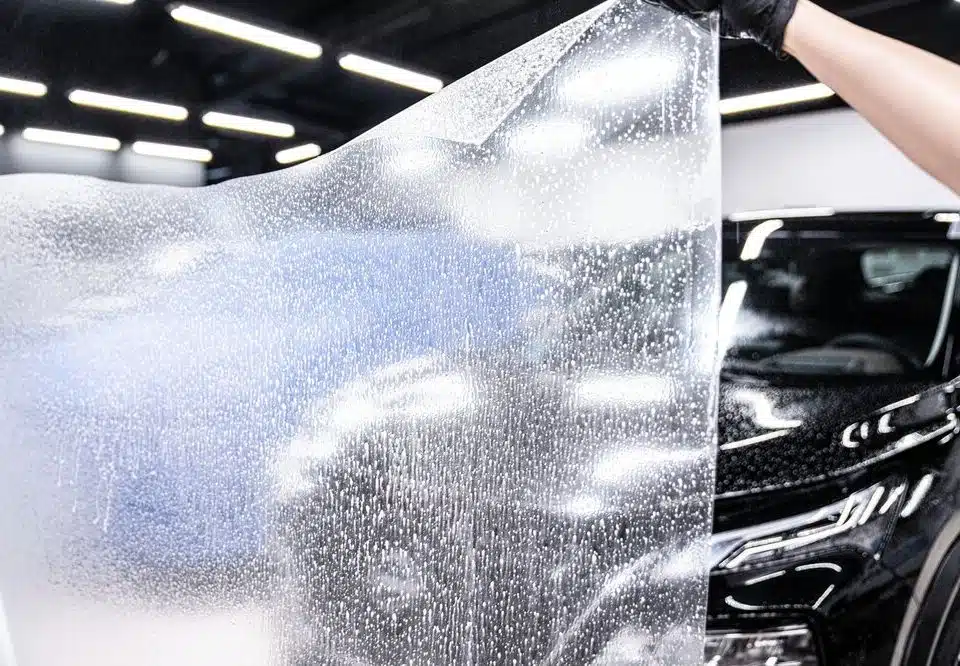
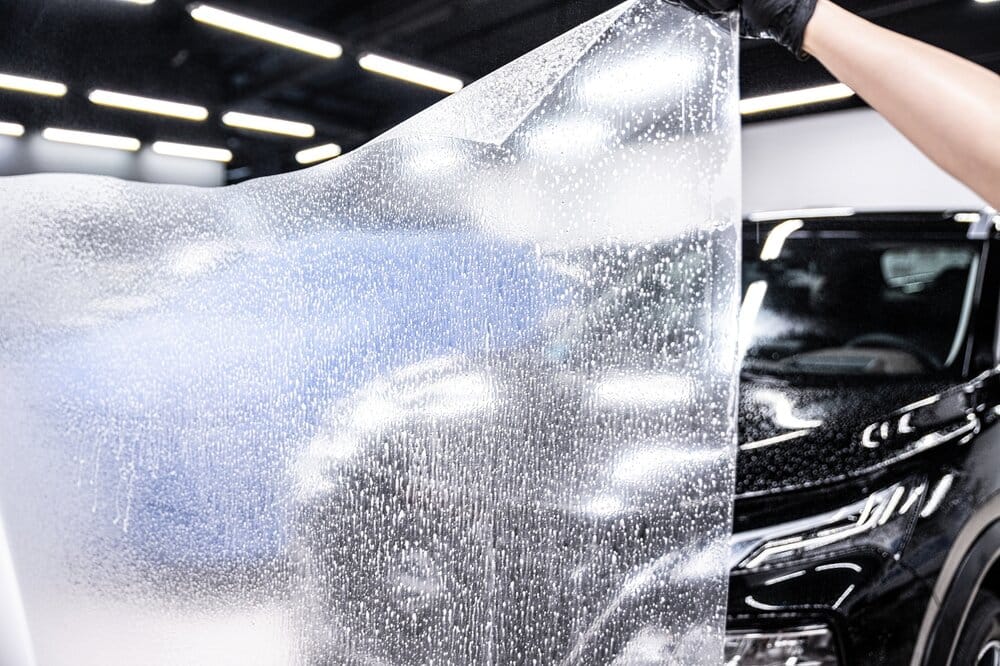
A freshly cleaned surface is not necessarily protected. Wax, synthetic sealant, ceramic coating and paint protection film offer different levels and types of protection.
Wax and sealant are relatively simple to renew. Ceramic coatings can improve chemical resistance and make cleaning easier, but they still require maintenance. Paint protection film adds a physical layer against chips and abrasion, while introducing edges, seams and eventual replacement needs.
Preparation matters. Coating over contamination or unresolved polishing residue can affect bonding and appearance. The ceramic coating process explains the inspection, correction, preparation and curing stages.
Interior Cleaning vs Interior Detailing
A routine interior clean typically includes rubbish removal, vacuuming and wiping compatible hard surfaces. Interior detailing goes further when soil is embedded, stains need treatment or less accessible areas require careful cleaning.
Material identification is essential. Coated leather, fabric, suede-like microfiber, headliners, touchscreens and glossy trim do not tolerate the same products, moisture or agitation. More steam, chemical strength or extraction is not always better.
Deep cleaning cannot guarantee removal of every stain or odour. Results depend on the contaminant, how long it has remained and whether it reached padding or structural material. Persistent dampness or mould concerns may require leak repair or specialized remediation rather than ordinary detailing.
Time and Cost Differences
A wash normally takes less time because the scope is narrower. Detailing can require extended inspection, chemical dwell time, repeated cleaning, drying, polishing or curing. Vehicle size matters, but condition and requested outcome often affect labour more.
Prices are difficult to compare without written scopes. One full detail may include only cleaning, while another includes decontamination and polishing. Ask what is included, what is optional and how additional work is authorized.
The guide on choosing a car detailing service provides a checklist for comparing methods, estimates, insurance and aftercare.
How Often Is Each Service Needed?
Wash according to exposure rather than waiting for a fixed date. Vehicles exposed to bird droppings, insects, salt, mud or sap need prompt cleaning. A garage-kept vehicle driven occasionally may remain clean much longer than a daily-driven vehicle stored outdoors.
Detailing steps occur at different intervals. Decontaminate when clean paint still feels rough or shows bonded particles. Polish only when defects justify material removal. Renew protection according to product behaviour and manufacturer guidance. Deep-clean the interior when routine upkeep no longer controls soil or odour.
For sample schedules, see how often a car should be detailed.
When a Car Wash Is Usually Enough
- The exterior has ordinary dust or light road film.
- The paint is already protected and behaves normally.
- No bonded contamination remains after washing.
- The interior needs only light vacuuming and wiping.
- There are no defects or stains requiring correction.
When a More Thorough Detail May Be Appropriate
- The paint still feels rough after a careful wash.
- Tar, iron particles, mineral deposits or overspray remain.
- Swirl marks, oxidation or light scratches need assessment.
- Protection needs renewal after proper cleaning.
- Carpet, fabric or crevices contain embedded soil.
- A vehicle is being prepared for storage, sale or a new protection product.
- Film, trim or interior materials need condition-specific care.
What Washing and Detailing Cannot Do
Neither process replaces mechanical maintenance or body repair. Washing does not correct scratches, and polishing cannot safely repair missing paint or failed clear coat. Interior cleaning cannot repair torn fabric, damaged foam or an unresolved water leak.
Detailing may improve presentation and make damage easier to inspect, but it cannot guarantee resale value, eliminate every allergen or prevent all future deterioration. Results should be described in terms of the actual surface condition and agreed work.
Common Misunderstandings
- “Hand washed” always means scratch-free: technique and tool cleanliness still determine risk.
- Clay is a harmless cleaning step: mechanical decontamination can mar paint.
- Polish and wax are the same: polish is abrasive; wax is protective.
- A coating removes scratches: coatings may alter gloss but do not replace correction.
- Full detail has a standard meaning: the included work varies by provider.
- More frequent polishing is better: unnecessary abrasion reduces clear-coat thickness.
How to Choose the Right Option
Begin with the least aggressive service that addresses the problem. If the vehicle is simply dirty, use a safe wash. If contamination remains or the interior needs deeper work, add the relevant detailing steps. If defects affect the paint, inspect and test before correction.
Ask for a written scope and realistic expectations. A good recommendation explains why each step is needed and what will remain afterward. The objective is not to purchase the longest package; it is to solve the vehicle’s current problems without unnecessary chemical or abrasive treatment.
Final Takeaway
Car washing is frequent surface maintenance, while detailing is targeted cleaning, correction and protection. Both are useful when performed for the right reason. Regular washing limits contamination, and occasional condition-based detailing handles the work that washing leaves behind.