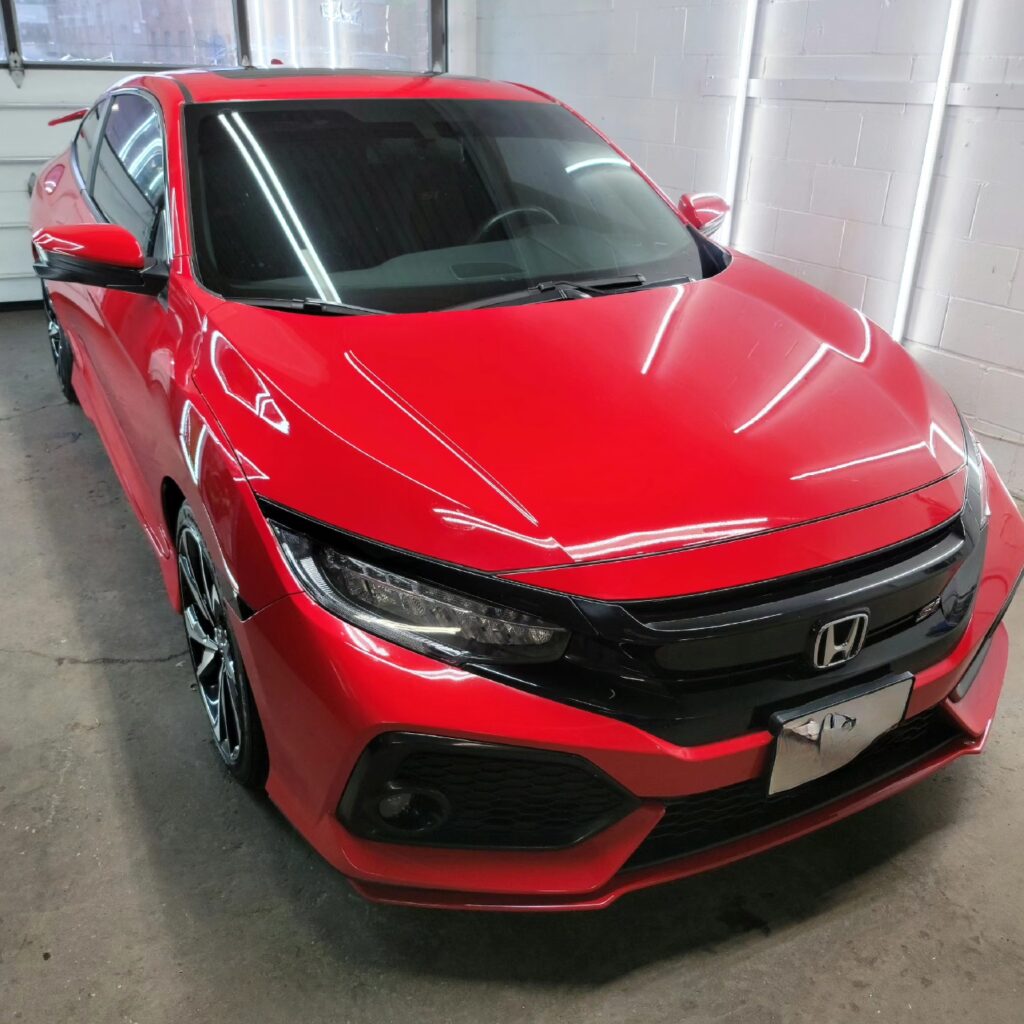

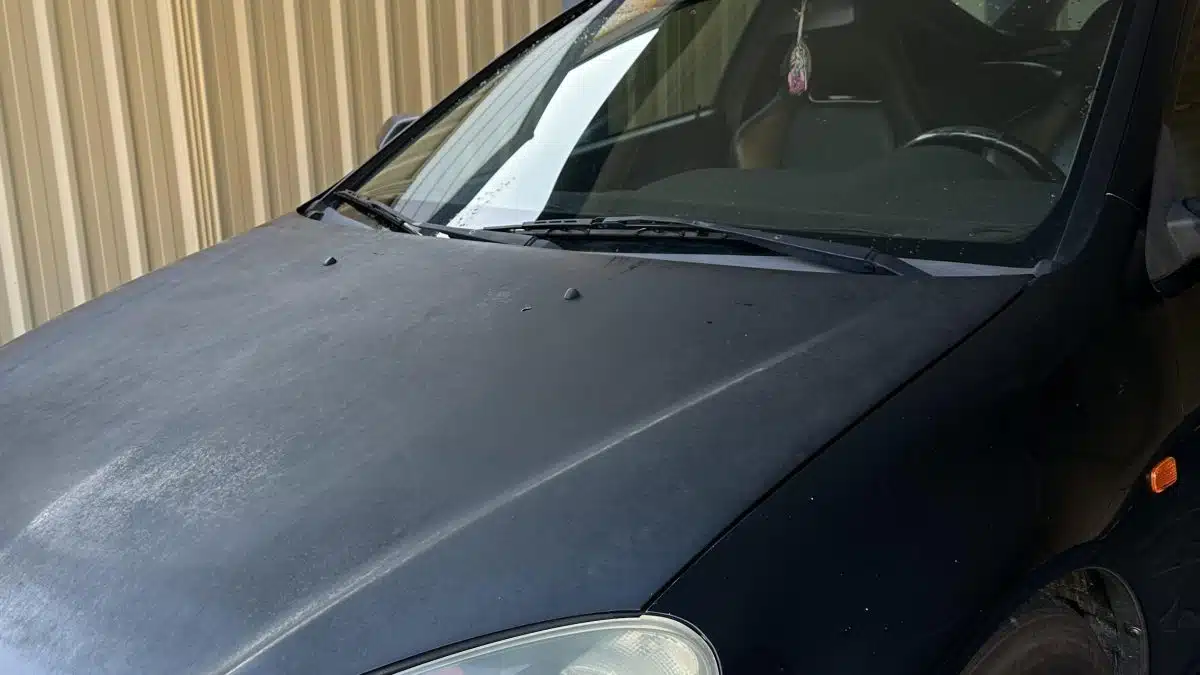
dull paint due to sun and other elements
Why does car paint look dull even when the vehicle is regularly washed? Swirl marks, oxidation, bonded contamination and improper washing can scatter light across the surface, making the finish look grey, cloudy or flat instead of deep and reflective.
The correct solution depends on what is causing the dull appearance. Some vehicles only need careful washing and decontamination. Others require machine polishing or professional paint correction to improve defects within the clear coat.
Quick answer: Dull car paint is commonly caused by swirl marks, oxidation, road film, mineral deposits or bonded contamination. Washing can remove surface dirt, but defects inside the clear coat normally require polishing or paint correction.
Why Does Car Paint Lose Its Gloss?
Gloss depends on how evenly light reflects from the painted surface. When the clear coat is smooth and clean, reflections appear sharp and the colour looks deeper. When thousands of fine defects or contaminants interrupt that surface, light is scattered in different directions and the paint begins to look dull.
The underlying colour may still be in good condition. In many cases, the problem is located in the transparent clear-coat layer above it. Identifying whether the issue is dirt, contamination, oxidation or physical defects is the first step toward choosing the correct treatment.
Swirl Marks
Swirl marks are collections of very fine scratches that become especially visible under direct sunlight, inspection lights or bright parking-lot lighting. They often form circular or cobweb-like patterns around the reflection of the light source.
Oxidation
Oxidation can make paint appear faded, chalky or cloudy. It develops as environmental exposure gradually affects the painted surface. The severity matters: light oxidation may respond to polishing, while advanced clear-coat failure cannot be safely corrected through ordinary detailing.
Bonded Contamination
Brake dust, industrial fallout, road film, mineral deposits, tree sap and other contamination can remain attached after a normal wash. This buildup reduces smoothness and gloss and may need chemical or mechanical decontamination before polishing is considered.
Old Wax, Sealant or Product Residue
Uneven product residue, mineral spotting and layers of neglected protection can also interfere with clarity. A proper assessment helps distinguish removable material on top of the paint from defects within the clear coat.
Swirl Marks Versus Deeper Scratches
Not every scratch is a swirl mark. Swirls are generally shallow defects spread across a wider area. Deeper scratches are more isolated and may be visible from several angles. A scratch that has penetrated beyond the safely polishable portion of the clear coat may remain visible even after professional correction.
A detailer should examine the paint under controlled lighting and perform a test spot before promising a result. The goal is measurable improvement while preserving as much healthy clear coat as possible—not chasing every defect regardless of risk.
| Paint condition | Typical appearance | Possible solution |
|---|---|---|
| Surface dirt or road film | Flat or grey appearance | Careful hand wash |
| Bonded contamination | Rough paint with reduced gloss | Chemical and mechanical decontamination |
| Light swirl marks | Cobweb patterns under bright light | Machine polishing or paint correction |
| Oxidation | Cloudy, faded or chalky finish | Assessment followed by polishing when safe |
| Deep scratches or clear-coat failure | Severe isolated damage, peeling or delamination | Body-shop assessment or refinishing may be required |
What Causes Swirl Marks?
Swirl marks are often introduced during routine cleaning rather than during driving. Any time dirt is dragged across paint, it can create fine scratches. The marks accumulate gradually, which is why a finish may look acceptable in shade but heavily swirled in sunlight.
- Automatic car washes that use rotating brushes or reused wash material
- Washing with a dirty mitt, sponge or towel
- Wiping dust from dry paint without proper lubrication
- Using household brushes or abrasive cleaning products
- Drying with rough, contaminated or unsuitable towels
- Removing bird droppings, bugs or tree sap too aggressively
A safer maintenance routine cannot make paint completely scratch-proof, but it can significantly reduce avoidable wash-induced damage. Our guide to professional exterior hand washing explains the difference between routine cleaning and deeper contamination removal.
Can Washing Restore Dull Car Paint?
Washing can restore clarity when ordinary dirt, salt film or loose grime is responsible for the dull appearance. If the paint remains rough after washing, decontamination may be necessary. If the surface feels clean but still looks hazy under strong lighting, the issue is more likely to involve defects within the clear coat.
This distinction is important because washing, decontamination and polishing perform different jobs:
- Washing removes loose dirt and surface grime.
- Decontamination removes material bonded to the paint.
- Polishing refines a small portion of the clear coat to improve correctable defects.
- Paint protection helps preserve the corrected finish but does not remove existing defects.
Will Wax Hide Swirl Marks?
Some waxes and glaze-style products can temporarily fill or disguise very light defects. The improvement may look convincing at first, but the marks often become visible again as the product wears away. Wax adds short-term gloss and protection; it does not permanently remove scratches from the clear coat.
Ceramic coating is also not a substitute for correction. Applying a coating over visible swirls can preserve the existing appearance beneath the coating. Paint should therefore be inspected and prepared to the agreed standard before long-term protection is applied. Learn more about professional ceramic coating and paint preparation.
How Professional Paint Correction Improves Gloss
Paint correction uses machine polishing, suitable pads and carefully selected compounds or finishing polishes to reduce correctable defects. The appropriate combination depends on paint hardness, clear-coat condition, defect depth and the finish the owner wants to achieve.
A responsible correction process generally includes:
- Inspection: The paint is examined for swirls, oxidation, scratches, previous repairs and clear-coat concerns.
- Cleaning and decontamination: Dirt and bonded particles are removed so they cannot interfere with polishing.
- Test spot: A small area is polished to determine the least aggressive method capable of producing the desired improvement.
- Machine polishing: Correctable defects are reduced while clarity, colour depth and reflection are improved.
- Final inspection and protection: The finish is checked under suitable lighting before the chosen wax, sealant or coating is applied.
Paint correction cannot safely eliminate every defect. Stone chips, deep scratches, peeling clear coat and severe paint failure may require touch-up work or refinishing. A professional assessment should set realistic expectations before work begins.
How to Prevent New Swirl Marks
- Remove loose grit before making contact with the paint.
- Use clean wash media and an automotive shampoo designed for painted surfaces.
- Do not wipe a dusty vehicle with a dry towel.
- Clean wheels with separate brushes and towels.
- Dry the vehicle with clean, soft microfibre towels or filtered air.
- Remove bird droppings, bugs and tree sap promptly without aggressive scrubbing.
- Avoid automatic washes that use abrasive contact brushes.
Good maintenance protects the result of polishing and reduces the need for frequent correction. There is no universal polishing schedule: the correct interval depends on washing habits, storage, mileage, environmental exposure and the actual condition of the paint.
When Should You Request a Paint Inspection?
Consider an inspection when the vehicle looks clean but still appears cloudy, when swirl marks are clearly visible in sunlight, or when gloss does not return after proper washing and decontamination. An inspection is also useful before applying ceramic coating because long-term protection should not be expected to correct defects already present beneath it.
MNV Auto Detailing can assess the finish, explain which defects appear correctable and recommend an appropriate level of polishing. View our paint correction in Toronto for process details, real results and available options.
Frequently Asked Questions
Can swirl marks be completely removed?
Many light and moderate swirl marks can be substantially reduced through machine polishing. The achievable result depends on defect depth, paint condition and how much clear coat can be safely refined.
Is dull paint always caused by oxidation?
No. Dirt, mineral deposits, bonded contamination, swirl marks and product residue can also make paint look dull. The surface should be cleaned and inspected before the cause is diagnosed.
Does ceramic coating remove swirl marks?
No. Ceramic coating adds protection but does not remove defects. Paint correction may be recommended before coating if swirl marks, haze or oxidation are present.
Can hand polishing improve dull paint?
Hand-applied products may improve gloss or temporarily hide very light defects, but consistent correction normally requires appropriate machine polishing, lighting and paint assessment.
How often should a vehicle be polished?
Polishing should be based on condition rather than a fixed schedule. Safe washing and proper protection can reduce how frequently correction is needed.
Restore Clarity and Gloss to Your Vehicle
If your paint remains dull after proper washing, the next step is an inspection—not another layer of wax. MNV Auto Detailing can determine whether decontamination, polishing or paint correction is the appropriate solution for the vehicle’s condition.