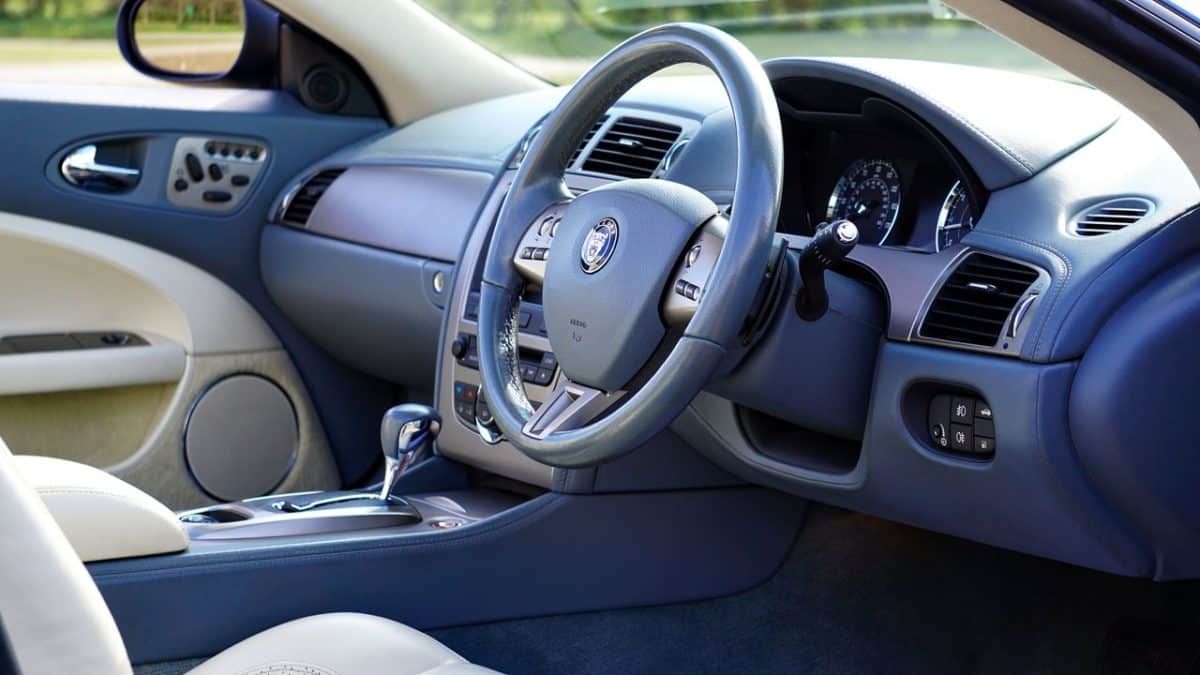
car interior
The inside of a car gets dirty in a way the outside doesn’t. Paint collects dust and road film. The cabin collects your life: drive-thru napkins, a kid’s Goldfish crackers ground into the seat rail, the dog’s hair, salty boots from November to April, and that coffee you spilled braking too hard on the Gardiner.
We clean a lot of interiors at MNV, and most of what makes the difference isn’t fancy products. It’s doing things in the right order and knowing which surfaces need a gentle hand. Here’s how we approach it, so you can do a solid job at home.
Empty It Completely First
Not “move things to the back seat.” Take everything out: mats, car seats, the umbrella under the passenger seat, the gym bag in the trunk, the receipts in the door pockets. You can’t clean around clutter, and you’ll find things you forgot you lost.
Slide both front seats all the way forward, then all the way back. Whatever lives in those rails has usually been there a while.
Work From the Top Down, Dry Before Wet
Gravity is the reason. Dust and crumbs fall, so start with the headliner and dash and finish with the carpet. And do all your dry work (vacuuming, brushing, blowing out dust) before you introduce any liquid. Wet dust turns into mud in seams and vent slats, and then you’re chasing it with a toothbrush.
A soft detailing brush in one hand and the vacuum nozzle in the other is the fastest way to pull dirt out of stitching, vents, and the gap around the gear shifter. If you have an air compressor, a quick blast into the seams helps a lot. A cheap paintbrush works surprisingly well too.
The Floor: Salt Is the Real Enemy
In Canada, carpets take more abuse than any other part of the car. Winter salt dries into those white, crusty tide lines, and it doesn’t just look bad. It stiffens the fibers and keeps drawing moisture back into the carpet.
Vacuum first, as hard as you can, with a stiff brush to loosen what’s matted down. Then mix roughly equal parts warm water and white vinegar, spray it on the stains, agitate with a brush and blot with a clean microfiber towel. You may need two or three rounds. The vinegar smell fades once it dries, we promise.
Rubber mats are easy: take them out, scrub with soap and water, rinse and let them dry fully before they go back in. Skip tire shine or any slippery dressing on them. A mat that makes your shoe slide off the brake pedal is a real hazard.
Carpeted mats can be treated just like the floor, and it’s worth hanging them somewhere warm to dry.
Fabric Seats
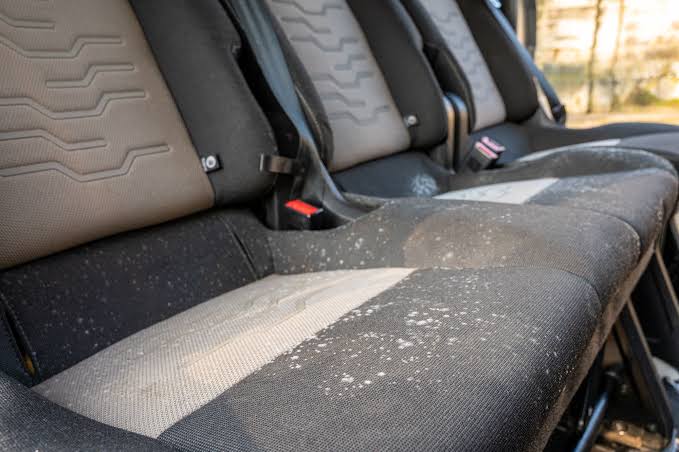
The most common mistake we see here is using too much water. Cloth seats have foam underneath, and foam holds moisture for days. That’s how a car ends up smelling like a basement in March.
Use an upholstery cleaner, mist it lightly, work it in with a soft brush, and blot it out with a towel. Repeat rather than soak. For older stains, a small handheld extractor is worth borrowing or renting, because it rinses and pulls the dirty water back out instead of pushing it deeper.
In our shop, we use 177°C steam and hot-water extraction for exactly this reason. Heat breaks down the grime, and extraction removes it instead of leaving it to dry back into the fabric.
Leather Seats
Leather is skin, and it treats harsh cleaners the way your hands would. Use a pH-neutral leather cleaner, a soft brush for the grain and perforations, and wipe off with a damp microfiber. Then apply a conditioner, sparingly, and buff off the excess so the seat doesn’t feel greasy.
Please keep magic erasers away from leather. They’re abrasive. They’ll lift the dirt, and the topcoat with it.
Dashboard, Plastics and Screens
Most interior plastics just need an interior cleaner on a microfiber towel, not sprayed directly on the dash where it drifts onto the windshield and electronics. Sticky cup holders respond well to a few minutes of soaking with a damp towel before you scrub.
For protectants, choose one with a matte or satin finish. The shiny, greasy kind looks nice for a day, collects dust immediately, and puts glare on the windshield when the sun’s low. Touchscreens and the instrument cluster scratch easily. Use a clean, dry microfiber, or one barely dampened with water. Don’t use household glass cleaner on them.
Headliner
Be gentle here. Headliner fabric is glued to a board, and the glue doesn’t like moisture or scrubbing. Spray cleaner on the towel, never on the headliner, and dab rather than rub. Push too hard, and you’ll end up with a sagging roof liner that costs real money to fix.
Glass Last
Do the windows at the end, because everything else you’ve done throws dust and overspray onto them. Use two towels, one to clean and one to buff dry. If you have aftermarket tint, stay away from ammonia-based cleaners, which can damage the film over time.
Pull the wipers forward and clean the bottom edge of the inside windshield too. It’s the strip everyone misses, and it’s where most of the haze builds up.
Smells: Find the Source
An air freshener over a bad smell just gives you two smells. Spilled milk, a forgotten gym towel or a wet carpet under the mat is almost always behind it, so look under the seats and lift the floor carpet edges if you can.
Also check your cabin air filter. A clogged one can make the whole car smell stale every time you turn on the fan, and it’s usually a five-minute swap behind the glove box.
Pet Hair
Vacuums struggle with it because the hair weaves into the fabric. A rubber glove dragged across the seat, or a pet hair stone, will ball it up so the vacuum can pick it up. It’s tedious work. There’s no shortcut that’s actually good for the fabric.
When It’s Worth Bringing It In
A careful home clean will handle routine mess. Some jobs are harder without the right equipment, though: deep salt in the carpet padding, smoke odor, mold from water getting in, heavy pet hair, or a full spring reset after a long winter. That’s usually when people look for professional car detailing in Etobicoke rather than spending a whole weekend fighting it.
If you’re getting the car ready to sell or return at the end of a lease, it’s also worth it. Stains and odors get noticed fast in an inspection, and cleaning them up properly costs less than most wear charges.
How We Can Help
Our owner, Milad, has been detailing cars around Toronto since 2004, and our interior work is built around steam, hot-water extraction and eco-friendly products that don’t leave a chemical smell in the cabin. For car detailing in Etobicoke, you can drop the car at one of our three shops, open every day from 7 a.m. to 10 p.m., or have us come to your driveway with our mobile setup. Give us a call at (647) 394-3656 and we’ll tell you what your interior actually needs, which is sometimes less than you’d think.