
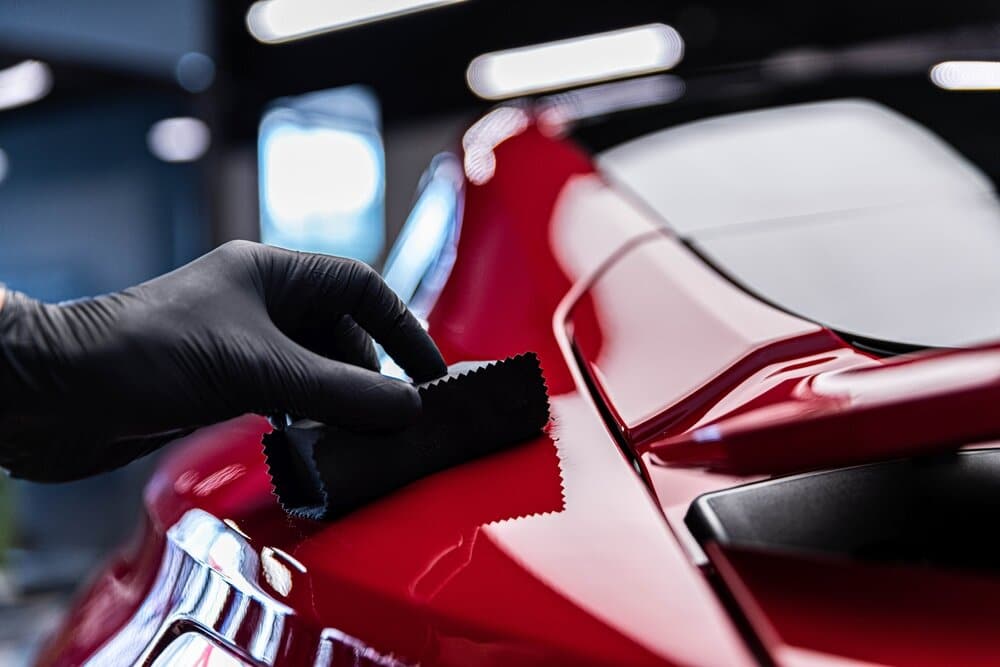
Ceramic coating maintenance is simpler than caring for unprotected paint, but the vehicle still needs regular washing and drying. A coating can make contamination easier to remove; it does not prevent dirt, minerals, road film or salt from collecting on the surface.
The correct routine depends on the coating system, driving conditions and manufacturer requirements. Always keep the installer’s written aftercare and warranty instructions. Product-specific directions take priority over general advice.
Protect the Coating During Its Initial Cure
A newly applied coating may feel dry before it has fully cured. During this early period, water, detergents and contamination can interfere with the surface or leave marks that are difficult to remove.
Ask the installer exactly when the vehicle can be exposed to rain, washed or treated with another product. Do not assume every coating uses the same schedule. Temperature, humidity, application method and coating chemistry all affect curing.
If bird droppings, insects, tree sap or another contaminant lands on the paint during the initial cure, do not scrub it. Contact the installer for instructions. Ceramic Pro’s official aftercare guide, for example, provides brand-specific washing, drying and early-care requirements for its coating system.
How Often Should a Coated Vehicle Be Washed?
There is no universal number of days between washes. A vehicle parked outdoors, driven long distances or exposed to insects, construction dust, coastal residue or road salt will need attention sooner than a lightly used garage-kept vehicle.
Wash before contamination forms a heavy bonded layer. Frequent gentle washing is generally safer than allowing months of buildup and then using aggressive cleaning. Inspect horizontal panels, lower doors, the rear of the vehicle and areas behind the wheels because grime often accumulates fastest there.
A simple rule is to wash when the surface is visibly dirty or when water behaviour becomes uneven. Reduced beading may be caused by traffic film sitting on the coating rather than coating failure.
Products and Tools for a Maintenance Wash
Use equipment that removes dirt while limiting unnecessary friction:
- a coating-compatible automotive shampoo used at the stated dilution;
- a clean wash mitt or multiple soft microfiber wash towels;
- separate buckets or another method that prevents dirty wash media from returning to clean solution;
- a soft wheel brush and separate wheel-washing tools;
- large, clean microfiber drying towels or filtered air; and
- an optional drying aid approved for the coating.
A shampoo does not need to produce extreme foam to clean effectively. Lubrication, safe chemistry, correct dilution and thorough rinsing matter more than the amount of visible suds.
Choose products based on the coating manufacturer’s guidance. For example, IGL describes its Ecoclean Wash as a pH-neutral shampoo intended for coated vehicles. That does not mean every product labelled pH-neutral is identical, so check compatibility and directions.
A Safe Washing Sequence
- Work on cool paint: move the vehicle out of strong direct sunlight when possible. Hot panels can dry shampoo and rinse water too quickly.
- Rinse loose contamination: remove sand, grit and loose dirt before making contact with the paint. Pay attention to wheel arches, lower panels and panel gaps.
- Use a pre-wash when needed: a suitable foam or pre-cleaner can loosen heavier road film before hand washing. Confirm that it is safe for the installed coating.
- Wash from cleaner areas to dirtier areas: start with upper surfaces and leave rocker panels and heavily soiled rear areas until later.
- Use straight, controlled passes: avoid forceful circular scrubbing. Rinse or replace the wash media as it becomes dirty.
- Keep wheel tools separate: brake dust is abrasive and should not be transferred to painted panels.
- Rinse thoroughly: remove shampoo from mirrors, trim, emblems, grilles and panel gaps.
- Dry the vehicle: do not rely on air drying, especially where water contains a high mineral concentration.
Touchless washing can remove loose contamination, but it may not remove bonded road film. If a touchless wash uses very strong chemicals, repeated use can also affect hydrophobic behaviour. Review the coating instructions before relying on it as the main wash method.
Drying Without Adding Swirl Marks
Drying is a contact stage, so clean towels and light pressure are important. Place a soft drying towel on the panel and draw it across the surface gently, or blot small areas. Replace the towel if it becomes dirty.
Filtered air is useful around mirrors, handles, trim, badges and panel gaps where trapped water later drips onto clean paint. If using a drying aid, confirm that it is approved for the coating and follow its directions. Too much product can leave streaks or buildup.
Never dry dusty paint. Rubbing a quick detailer into a layer of grit can create wash marks even when the product is marketed as adding lubrication.
Removing Bird Droppings, Insects and Tree Sap
Organic contamination should be removed promptly because time and heat can make it more difficult to clean. Soften the material with a coating-safe cleaner or damp microfiber towel rather than scraping it.
Use the least aggressive method that works:
- Rinse loose residue.
- Allow a compatible cleaner to dwell for its stated time.
- Wipe gently with clean microfiber.
- Rinse and inspect the area.
If a mark remains, avoid repeated hard rubbing. It may be mineral residue, staining or etching that requires a different process. An installer can determine whether the contamination is on the coating or has affected the paint below.
Preventing and Managing Water Spots
Hydrophobic paint can still develop water spots. Beading concentrates minerals into smaller areas as droplets evaporate. Sunlight and hot panels can accelerate deposition.
Dry the vehicle after washing and avoid parking beside sprinklers when possible. Fresh mineral residue may come off with a normal wash or a coating-safe water-spot remover. Test stronger products in a small area and follow the manufacturer’s dwell time.
Do not use household acidic cleaners, abrasive polishing compounds or hard scraping tools without confirming they are appropriate. A product strong enough to remove severe deposits may alter the coating.
When a Coating Needs Decontamination
Normal shampoo removes loose dirt but may not remove embedded iron particles, tar, mineral film or other bonded contamination. Signs that decontamination may be needed include a rough surface after washing, patchy water behaviour or persistent dullness.
Start with chemical methods approved for the coating. Mechanical clay can remove bonded particles, but it also introduces friction and may mar the finish or reduce water repellency. Use it only when necessary and with suitable lubrication.
Some manufacturers offer maintenance cleaners designed to expose an existing coating rather than cover it with another layer. GYEON, for example, states that Q²M RestartWash removes road film and embedded contamination without adding protection. Use only products compatible with the installed system.
Do Ceramic Boosters and Toppers Help?
A maintenance spray can increase slickness, gloss and water repellency. It may also provide a sacrificial layer over the base coating. However, a topper can temporarily hide the coating’s true condition, and an incompatible product can cause smearing or uneven behaviour.
Use the product and schedule specified by the coating manufacturer or installer. More frequent application is not automatically better. Excess material can attract dust, streak on dark paint or create buildup that later needs removal.
Are Automatic Car Washes Safe?
Brush and cloth car washes can retain abrasive grit from previous vehicles. Their repeated contact may create swirl marks on coated and uncoated paint. A ceramic coating does not make the clear coat immune to that friction.
A touchless wash avoids rotating brushes but may rely on stronger detergents and may leave some road film behind. When hand washing is not possible, check the coating manufacturer’s recommendations and understand the trade-off.
Signs the Coating Should Be Inspected
Arrange an inspection if you notice:
- water behaviour that does not improve after a thorough wash and decontamination;
- persistent roughness, mineral deposits or staining;
- peeling, flaking or obvious uneven patches;
- damage following body repair or machine polishing;
- a requirement for periodic inspection under the written warranty; or
- uncertainty about whether a strong chemical has affected the coating.
Hydrophobic performance alone does not reveal the complete condition of the film. An installer can compare different panels, inspect contamination and recommend cleaning, maintenance or reapplication.
Common Ceramic Coating Maintenance Mistakes
- Washing before the initial cure period is complete.
- Using dirty mitts, brushes or drying towels.
- Letting shampoo or hard water dry on hot paint.
- Assuming pH-neutral means every cleaner is safe at every concentration.
- Using wheel tools on body panels.
- Scrubbing bird residue or tree sap while it is dry.
- Applying multiple boosters without checking compatibility.
- Expecting water beading to replace washing and drying.
- Ignoring warranty inspection or maintenance requirements.
Final Takeaway
Good ceramic coating maintenance is based on gentle, consistent cleaning rather than aggressive correction after contamination has accumulated. Follow the installed product’s curing instructions, wash with clean tools, dry the paint, remove contamination promptly and use maintenance products only when they are compatible.
For the chemistry behind the protection, read how ceramic coatings work on automotive paint. The full ceramic coating application process also explains why preparation and curing affect long-term results.